
A minor sprain, strained muscle, or sports injury can make everyday movement uncomfortable. Many people prefer a topical product because it can be applied directly to the painful area.
Table of Contents
ToggleVoltaren Extra Strength is a popular non-prescription pain-relief gel in Canada. However, “Extra Strength” does not mean it is suitable for every type of pain or safe for everyone.
This pharmacist-led review explains what Voltaren is, how it works, its advantages and limitations, common customer questions, possible side effects, and when medical attention is needed.
What Is Voltaren Extra Strength?
Voltaren Emulgel Extra Strength is a topical anti-inflammatory gel containing diclofenac diethylamine 2.32%, or 23.2 mg per gram.
Diclofenac belongs to a group of medications called non-steroidal anti-inflammatory drugs, commonly known as NSAIDs. Other NSAIDs include ibuprofen, naproxen and aspirin.
In Canada, Voltaren Extra Strength is authorized for pain associated with recent, localized minor muscle or joint injuries. Health Canada lists it as a marketed non-prescription medication under DIN 02393190.
It is applied to the skin over the injured area. It is not simply a cooling or warming muscle rub—the gel contains medication that reduces inflammation in the tissues beneath the skin.
Pros and Cons
Pros
- Applied directly to a defined painful area
- Helps reduce both pain and inflammation
- Used only twice daily
- Non-greasy and generally easy to rub into the skin
- May reduce the need to immediately use an oral NSAID
- Supported by clinical evidence for certain acute sprains and strains
- Available without a prescription in Canada
Cons
- Not appropriate for every type of pain
- Each 2 g dose should be measured with the supplied dosing card
- Can cause redness, itching, or skin irritation
- Must not be casually combined with oral NSAIDs
- Intended only for short-term self-treatment
- Not intended for people younger than 18
- People older than 65 should consult a healthcare professional first
- Does not treat fractures, serious injuries, or the underlying cause of chronic pain
What Is Voltaren Extra Strength Used For?
Voltaren Extra Strength is intended for recent, localized minor muscle or joint injuries. These may include:
- A minor ankle sprain
- A strained shoulder
- A recent back-muscle strain
- A mild sports injury
- Localized muscle or joint pain after minor overuse
The words “recent,” “localized,” and “minor” are important.
Recent means the pain started fairly recently. Localized means the person can identify a reasonably small painful area. Minor means there are no signs suggesting a fracture, dislocation or substantial tissue injury.
Voltaren is less likely to be appropriate for burning, shooting or tingling nerve pain. It should not be used for headaches, dental pain, chest pain, abdominal pain or widespread body aches.
Persistent knee or back pain should not automatically be treated as a simple strain. It may require assessment to identify arthritis, tendon problems, nerve involvement or another cause.
How Does Voltaren Work?
When a muscle or joint is injured, the body produces substances called prostaglandins. These substances contribute to pain, tenderness and inflammation.
Diclofenac reduces prostaglandin production. After Voltaren is applied, the medication passes through the skin and acts in the tissues beneath it.
The gel may feel slightly cool, but this sensation is not responsible for its main effect. The active anti-inflammatory medication distinguishes Voltaren from non-medicated cooling gels.
Topical use generally results in less diclofenac entering the bloodstream than when the medication is taken orally. However, some systemic absorption still occurs. NSAID allergies, interactions, and dosage limits therefore remain important.
Customer Interactions With a Pharmacist
Customers often approach pharmacists with a product already in mind. A useful conversation usually begins with the cause of the pain rather than the brand name.
“I hurt my ankle yesterday. Can I use Voltaren?”
A pharmacist will ask how the injury occurred, whether the person can bear weight, and whether there is substantial swelling, bruising or deformity.
Voltaren may be reasonable for a mild sprain when the person can walk, and there are no signs of a serious injury. Significant swelling, severe pain or an inability to bear weight should be assessed.
“My knee has been painful for several months. Will this help?”
Persistent knee pain is different from a recent minor injury. Although topical NSAIDs may be used for some people with knee osteoarthritis, the Canadian Extra Strength product is labelled for recent, localized minor injuries.
A pharmacist may recommend medical assessment instead of repeated short-term treatment, particularly when the knee is swollen, stiff, unstable or painful without a clear cause.
“Can I use it with Advil or Aleve?”
Voltaren, Advil and Aleve are all NSAIDs. Combining topical diclofenac with oral ibuprofen or naproxen may increase the risk of stomach bleeding, kidney problems and other adverse effects.
A pharmacist will usually review all medications before recommending that combination.
“Can I use Tylenol with Voltaren?”
Tylenol contains acetaminophen, which is not an NSAID. It does not create the same duplication as ibuprofen or naproxen.
Some adults may be able to use acetaminophen with topical diclofenac. A pharmacist will still consider liver disease, alcohol consumption and other acetaminophen-containing products.
“Does one application provide 12 hours of relief?”
The twice-daily directions allow approximately 12 hours between applications. This does not guarantee complete pain relief for exactly 12 hours.
Customers should not apply additional gel simply because discomfort returns before the next scheduled dose.
“Should I buy Extra Strength because it works faster?”
Not necessarily. Extra Strength contains a higher concentration and requires fewer daily applications, but it does not guarantee faster or stronger relief for every person.
The main practical advantage is its convenient morning-and-evening schedule.
How to Apply Voltaren Extra Strength
The Canadian directions apply to adults between 18 and 65 years of age.
Measure 2 g using the dosing card included with the package. Apply the gel to the painful area twice daily—once in the morning and once in the evening.
Rub it gently into clean, dry, and intact skin. Wash your hands afterward unless your hands are being treated.
Do not use more than 4 g in one day. Applying extra gel will not necessarily increase pain relief.
Avoid using it:
- On cuts, wounds, eczema or rashes
- Near the eyes or mouth
- Under an airtight dressing
- With a heating pad over the treated area
- Alongside another medicated cream on the same skin
- For more than seven days unless directed by a doctor
A normal brace or injury wrap may be used if it does not create an airtight covering.
Possible Side Effects
The most common Voltaren side effects occur where the gel is applied. These may include:
- Redness
- Itching
- Mild stinging
- Skin irritation
- Rash
These reactions are usually mild. Stop using the product if a rash develops or irritation becomes significant.
In rare cases, the treated skin may become unusually sensitive to sunlight. Protect the area from intense sun exposure and avoid tanning lamps.
Some diclofenac enters the bloodstream, so systemic reactions remain possible even though the medication is applied topically.
Stop using Voltaren and seek urgent medical attention for wheezing, breathing difficulty, widespread hives, or swelling of the face, lips, tongue, or throat. These symptoms may indicate a serious allergic reaction.
When to See a Doctor
Voltaren should not be used to hide symptoms of a potentially serious injury.
Seek medical care if you have:
- Severe or rapidly worsening pain
- Obvious deformity
- Significant swelling or bruising
- Inability to stand, walk or use the injured area
- Numbness, weakness or loss of sensation
- A hot, red joint with fever
- A joint that locks or repeatedly gives way
- Pain after a major fall, collision or twisting injury
- Pain without a clear cause
- Symptoms that do not improve within seven days
Calf swelling accompanied by chest pain or shortness of breath requires urgent medical attention.
A minor injury should generally begin moving in the right direction within several days. Continuing to apply the gel without improvement can delay the diagnosis of a more significant problem.
Where to Buy Voltaren Extra Strength
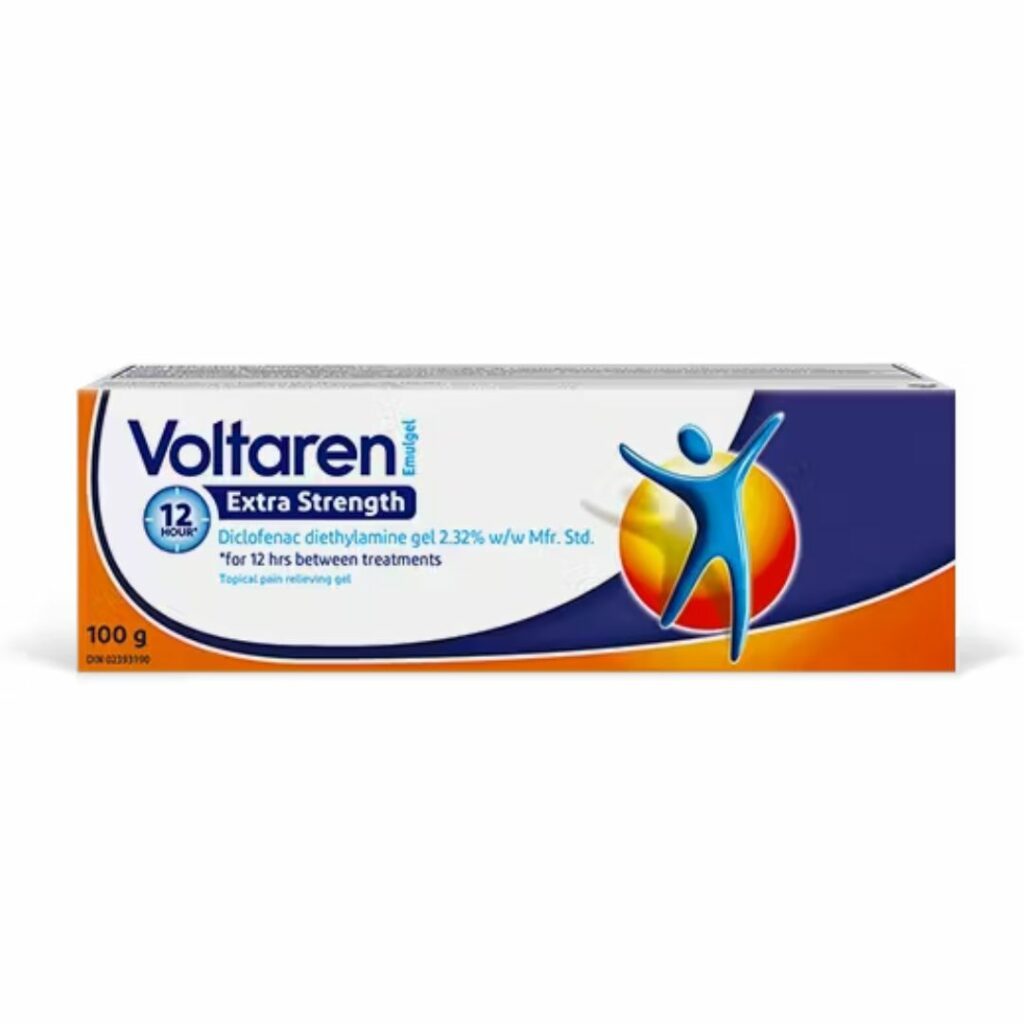
Canadian consumers can buy Voltaren Emulgel Extra Strength 2.32% from Pharmacy24, subject to current stock and package availability.
Before ordering, confirm:
- The complete product name
- Diclofenac diethylamine 2.32%
- Canadian DIN 02393190
- The selected tube size
- The expiry date after delivery
- Shipping costs and the final checkout price
Avoid copying directions from American websites. US Voltaren Arthritis Pain Gel commonly contains diclofenac sodium 1% and follows a different application schedule.
Alternatives to Voltaren Extra Strength
The best alternative depends on the cause of the pain, the person’s health, and other medications.
Acetaminophen
Acetaminophen can reduce pain but does not have the same anti-inflammatory effect as diclofenac. It may be considered when an NSAID is unsuitable, although liver health, alcohol intake and total daily dosage must be reviewed.
Oral NSAIDs
Ibuprofen and naproxen may help inflammatory pain but expose the whole body to the medication. They may not suit people with ulcers, kidney problems, cardiovascular conditions or certain medication interactions.
Do not combine them with Voltaren without professional advice.
Non-Medicated Topical Products
Menthol, camphor and cooling products can create temporary warming or cooling sensations. They work differently from diclofenac and may be suitable for some minor aches.
Heat or Cold Therapy
Cold may help shortly after a minor injury, while gentle heat may feel better for certain muscle aches. Avoid applying external heat directly over Voltaren.
Rest and Activity Modification
Temporarily reducing an aggravating activity can be as important as using pain medication. A gel should not be used to mask pain so that an injured area can immediately return to strenuous activity.
Topical Pain Reliever Comparison
Voltaren Extra Strength
Contains diclofenac diethylamine 2.32%. It reduces pain and inflammation and is applied twice daily for recent, localized minor muscle or joint injuries.
Voltaren Regular Strength
Contains diclofenac diethylamine 1.16%. It generally requires three or four applications daily. It is not necessarily less effective when used according to its own directions, but it is less convenient for people who prefer twice-daily treatment.
Menthol or Camphor Rubs
These products create cooling or warming sensations that can temporarily distract from discomfort. They do not work through the same anti-inflammatory mechanism as diclofenac.
Topical Lidocaine
Lidocaine numbs the treated area and may be used for certain types of localized discomfort. It does not reduce inflammation and should not automatically be substituted for Voltaren when inflammation is contributing to the pain.
Capsaicin Cream
Capsaicin affects pain signalling and is more commonly considered for certain persistent pain conditions. It can cause burning during early use and does not provide the same short-term approach as Voltaren for an acute sprain.
The best topical option depends on whether the pain is caused by inflammation, nerve irritation, a recent injury or another condition.
Frequently Asked Questions
Q: What is Voltaren Extra Strength used for?
It is used in Canada for pain associated with recent, localized minor muscle or joint injuries, including sprains, strains and sports injuries.
Q: Is Voltaren Extra Strength available without a prescription?
Yes. The Canadian 2.32% gel is available as a non-prescription medication.
Q: How often should I apply it?
Adults aged 18 to 65 should apply 2 g twice daily, in the morning and evening. Do not exceed 4 g per day.
Q: Is Voltaren suitable for arthritis?
Topical NSAIDs may be appropriate for some people with osteoarthritis. However, Canadian Voltaren Extra Strength is labelled for recent minor injuries. Persistent arthritis symptoms should be discussed with a pharmacist or physician.
Q: Is Voltaren good for back pain?
It may be suitable for a recent, localized minor back-muscle strain. Severe, recurring or unexplained back pain requires assessment.
Q: Can seniors use Voltaren Extra Strength?
The Canadian self-care directions are for adults aged 18 to 65. People older than 65 should speak with a healthcare professional before using it.
Conclusion
Voltaren Extra Strength can be a practical short-term option for a recent, localized minor sprain, strain or sports injury. It delivers an anti-inflammatory medication directly over the painful area and requires only two applications per day.
Its main limitation is that it is often chosen without first identifying the type of pain. Persistent knee pain, nerve symptoms, severe swelling, and unexplained discomfort may require a different treatment or medical assessment.
Use the supplied dosing card, avoid combining it with other NSAIDs without professional advice, and stop self-treatment if the condition worsens or fails to improve within seven days.
About the Health Experts Behind This Article
Our health content is written in a patient-friendly format and reviewed to help ensure it is clear, practical, and aligned with pharmacy guidance available at the time of publication.
Pharmacy24 Editorial Team
The editorial team prepares general health and pharmacy-related content to help readers better understand topics such as medications, supplements, vaccinations, travel health, and everyday pharmacy care.
Our content is developed with a patient-friendly approach and is intended for educational purposes only.

He is a registered pharmacist in British Columbia. He provides professional input on selected health content to help ensure the information is clear, practical, and consistent with commonly available pharmacy and public health guidance at the time of publication.
This content is for general education and should not replace personalized advice from a pharmacist, physician, or other healthcare professional.